Journal · · 2 min read
What Is a Tagine? Moroccan Tagine in St. Petersburg
The pot with the pointed lid and the stew that comes out of it share one name. Here is what is happening under that lid, and how to order tagine at Cybel.
A Moroccan tagine is two things at once: the clay pot with the tall pointed lid, and the slow-cooked dish that comes out of it. If you have only seen one in a photo, here is what is actually happening under that lid, what goes into one, and how to order a tagine in St. Petersburg at Cybel.
What Is a Tagine?
A tagine is a North African stew of meat, fish or vegetables, cooked slowly with spices and very little liquid. It is named after the shallow clay dish with a cone-shaped lid it is traditionally cooked and served in. The pot and the food share one word, the way a casserole does.
How a Tagine Pot Works
The cone is the whole trick. As the stew simmers, steam rises into the narrow top of the lid, cools, and runs back down the sides into the food. Moisture keeps returning to the dish instead of escaping, so a tagine braises in its own juices with far less water than a stockpot would need.
That is why the meat comes out soft enough to pull apart with bread, and why the sauce ends up concentrated rather than soupy. It is a technique built for slow fires and tougher cuts, and it still works. Traditionally the base goes straight to the table, so the dish arrives in the clay it cooked in.
Sweet and Savory: What Goes in a Moroccan Tagine
Moroccan tagines lean on a handful of combinations cooked for generations: lamb with dried fruit and nuts, chicken with preserved lemon and olives, beef with prunes, fish with peppers and potatoes. The sweet notes are deliberate, and they are balanced with warm spice rather than sugar alone.
The spice is usually some mix of cumin, ginger, turmeric, cinnamon and saffron, or ras el hanout, a blend whose name means “head of the shop”: the best a spice merchant has.
Is tagine spicy?
Usually not. Moroccan tagine is warmly spiced rather than hot. Heat tends to come from harissa on the side, so each person at the table decides how far to take it.
The Tagines on Our Menu in St. Petersburg
Cybel's tagines sit in the From Morocco section of the dinner menu:
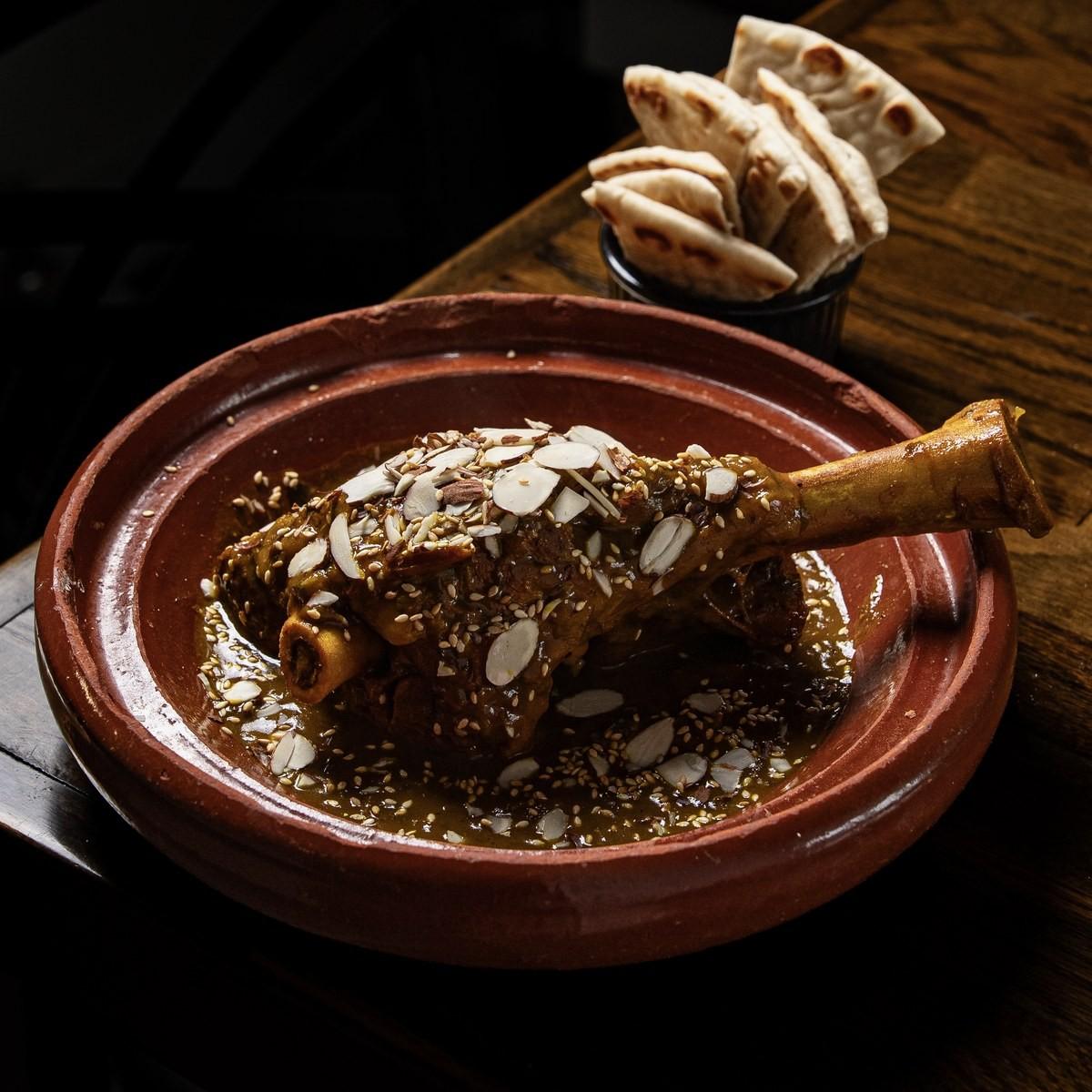
- Lamb tagine: slow-cooked lamb with apricots and almonds, finished with sesame seeds.
- Chicken tagine: a quarter chicken slow-cooked with artichokes and green peas.
- Vegetable tagine: seasonal vegetables slow-cooked with Moroccan spices.
Its close cousin, tangia, comes from Marrakech and is slow-cooked in a tall clay urn. Ours is beef trotters with garlic, onions, chickpeas and ras el hanout. The monthly special rotates, so check the dinner menu for anything new.
How to eat tagine
With bread. In Morocco a tagine is eaten from the shared dish, with torn khobz used to scoop up meat and sauce, and the bread does as much work as a fork. Order a side of khobz, or the batbout with whipped feta butter, and do it properly.
Tagine takes hours, which is exactly why it is worth going out for. Cybel serves dinner Tuesday to Sunday at 2735 5th Ave N in Historic Kenwood, St. Petersburg. Reserve a table, bring a bottle since we are BYOB, and order the lamb.